
This morning Het Financieele Dagblad reported that the Dutch competition authority, the ACM, is examining the construction sector for prohibited agreements now that the number of tenders is rising sharply. It is not an abstract concern. In June the ACM fined contractors for rigging a municipal civil engineering tender: they had agreed their bid prices and decided between them who would win.
By coincidence I teach today at VU Law Academy on the question of what contracting authorities and tenderers may, and must, say to each other during a procurement. The two subjects are the same coin.
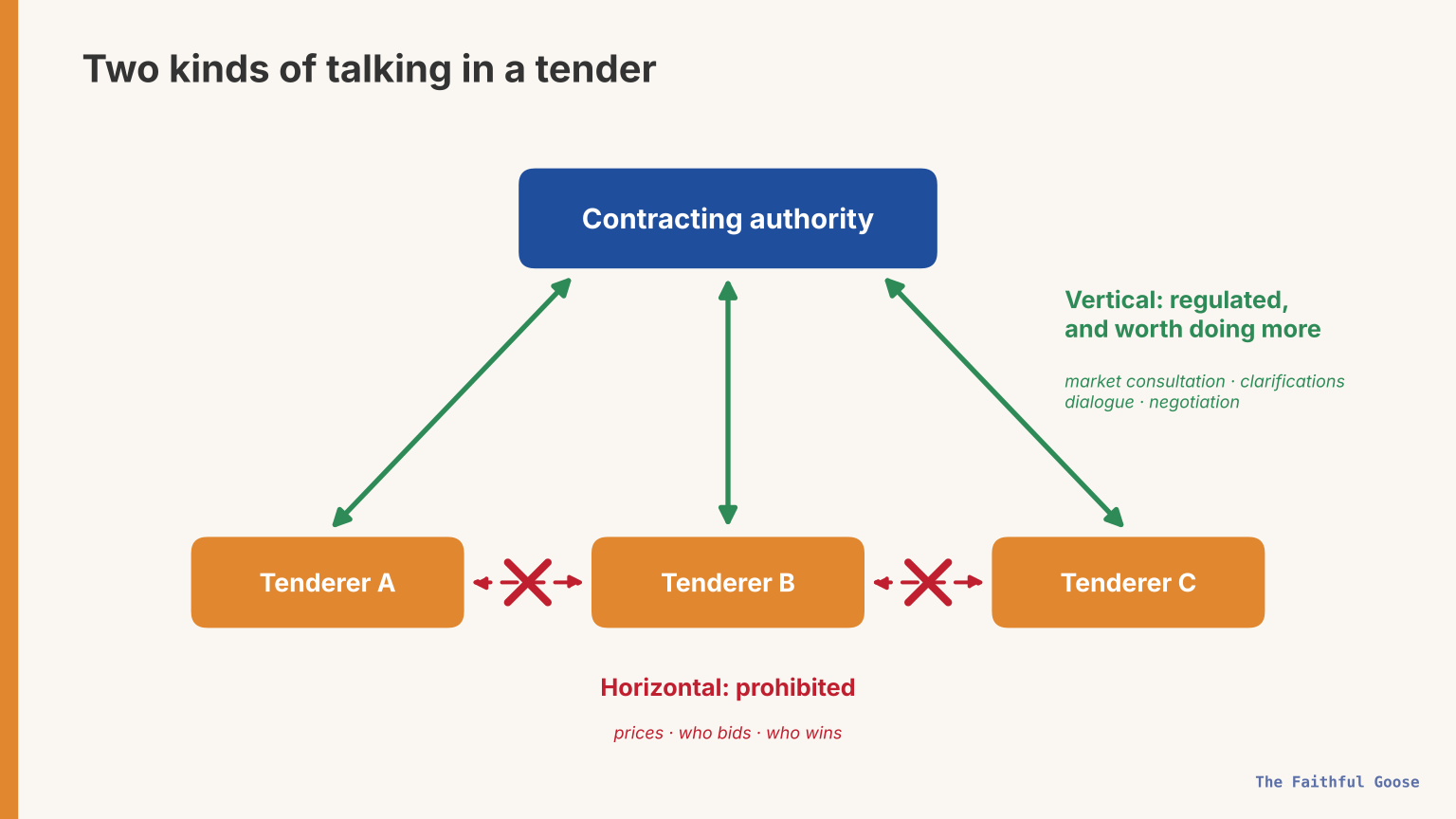
There are two kinds of talking in a tender.
The first is horizontal: tenderers talking to each other about prices, about who bids and about who wins. That is prohibited, and rightly so. The public client, and in the end the taxpayer, pays the bill.
The second is vertical: the contracting authority talking with the market. Market consultation before the tender. Questions and answers during it. Dialogue and negotiation where the procedure allows it. Clarification of a tender after submission. This kind of talking is regulated by the principles of equal treatment and transparency, and it is exactly what makes projects succeed.
The risk I see is that the two get confused. A client who reads about cartels may decide that the safest tender is a silent one: a thick set of documents, a single round of written questions, and no conversation. That feels safe. It is not. What the author of a tender document means and what the reader understands are rarely the same thing. Language, perception and culture all sit in between. Every unasked question becomes an assumption, every assumption a difference in expectation, and those differences are where disputes begin. Oliver Hart's work on incomplete contracts explains why: no document can provide for everything, so what matters is how parties fill the gaps.
European law is moving the same way. The European Commission's proposal for a Public Procurement Act of September 2026 would make negotiation an option in every procedure, within clear limits. That is a vote of confidence in vertical communication.
So the lesson of this morning's news is not "talk less". It is: talk more with the market, in the open, on the record and on equal terms. And when the pattern of bids suggests that tenderers have been talking to each other, act on it. Contracting authorities can exclude on sufficiently plausible indications of collusion, and they can report to the ACM.
Silence between client and market does not prevent cartels. It only makes projects worse.
Arent van Wassenaer