
Every major standard form promises, somewhere in its pages, to help the parties avoid disputes. NEC4 has early warning and the risk register. FIDIC 2017 has advance warning and a standing dispute avoidance and adjudication board. And still the disputes keep coming. So is the outcome decided on the day the parties choose their form? Or is that a story lawyers tell each other?
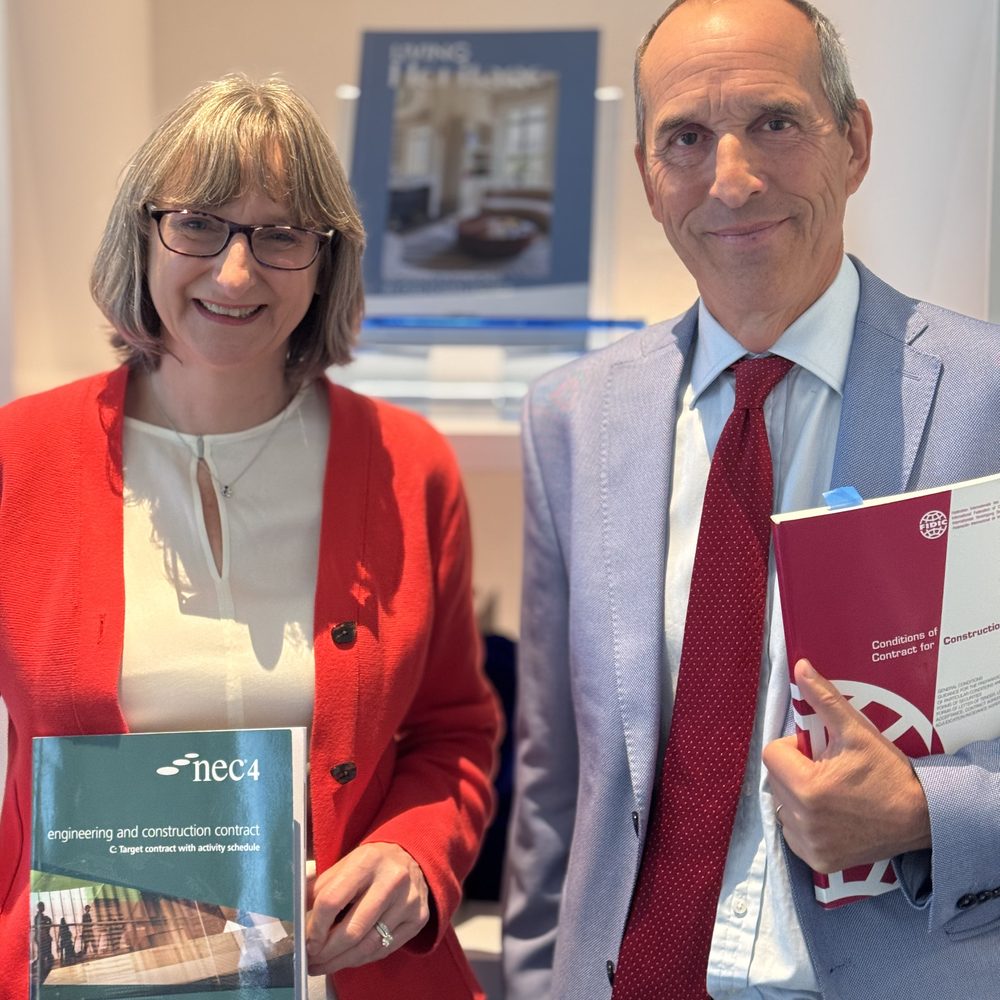
I put that question in Copenhagen, on the Sunday of the IBA Annual Conference, to two past co-chairs of the IBA International Construction Projects Committee. Shona Frame is a partner at CMS in Glasgow and one of the leading NEC practitioners in the United Kingdom. Edward Corbett founded Corbett & Co, now part of Howard Kennedy, has worked with FIDIC since a large dispute in Kuwait in the 1980s, is the author of the standard FIDIC commentary and is president of the ICAA. One NEC, one FIDIC. I expected a contest.
There was none. Both said no, and quickly.
The dispute is priced in at the bid
Shona's list of what really drives a dispute has nothing to do with the form. How fast was the process to get into contract? Was the design fully developed? The scope? Was the price right, or was it a race to the bottom? What are the margins? Was there a temptation to sign now and sort things out later? Edward added competitive bidding, unrealistic time frames often driven by funding constraints, and major errors in design, and reminded us of the old line that the bidder who makes the biggest mistake gets the job. A contractor who has bid below cost, by mistake or on purpose, has to claim, and to exaggerate claims, simply to get back into the black. No clause repairs that. It is baked in before anyone signs.
Edward named two more upstream factors. A contractor that depends on the same domestic employers for its next job thinks twice before taking a dispute all the way; an international bidder who may never work in that country again does not. And on public projects there is audit proofing: civil servants who cannot accept a perfectly reasonable recommendation because they need a decision to show the auditor. The Lima guests said exactly the same thing in episode 1. Different continent, same problem.
Lubricate, or crystallise
Is the form irrelevant then? Not quite, and this is where it gets interesting. The machinery in a contract works in both directions.
Shona described how NEC4 actually runs on the projects that reach her desk. An early warning is issued, and then nothing. The risk reduction meeting does not take place, or takes place without deciding anything, because an instruction would turn into a compensation event with time and money attached. Or a compensation event is notified within the strict time limit and promptly rejected by the project manager within the time limit for doing that. Everybody has complied. Nothing has moved.
"What I see in some of the projects I've dealt with is a sort of technical compliance, a tick box compliance with the contract, which doesn't actually move forward and actually just crystallizes issues."
FIDIC has its own version. Edward was blunt about its strict notice regime: an awful lot of unnecessary disputes have been created by overly rigorous time bars, and the escape routes in the 2017 edition are a sticking plaster on a problem that was self-inflicted. Shona added that NEC has strict time bars too, and that bespoke Z clauses often make them stricter still.
What works the other way? For Shona, the early warning and risk reduction process, properly operated. For Edward, without hesitation, the dispute board. It arrives on site at regular intervals, asks about everything and anything, hears about a late design that could hold up the next phase, and comes back months later: what happened, was it sorted out, is everybody content?
"If it's not happening organically and naturally between the contract participants, the dispute board has the ability to lubricate that process."
His best evidence was a site he visited twice. The first time it was a death trap: mud up to your knees, filthy scaffolding, hardly any protective equipment. The second time was the day before the board's visit. Everyone had their PPE on, the mud was covered with hardcore, the scaffolding was clean, the paperwork was in order. And this was a dispute review board, one that could only make recommendations, which Edward had assumed would carry little weight. How wrong he was. Nobody wanted to be on the wrong side of three senior construction professionals.
Yet that is precisely the mechanism the parties drop. In NEC4 the board is option W3, and Shona has not seen it operated in practice. In FIDIC it is standing, but often struck out in the particular conditions, or quietly allowed to lapse early in the project, on grounds of cost or wild optimism. Always a mistake, says Edward. A false economy.
In short
In short, the contract model does not decide the dispute. The bid decides whether there will be something to fight about, and the behaviour of the parties decides whether it becomes a fight. What the form decides is which tools are on the table. Shona's own best story was about stepping outside the contract altogether: in the middle of a court action, the parties agreed to an expert determination on the one causation issue that blocked everything, and the decision unlocked a negotiation that settled far faster and cheaper than court would have. Most clients are not in the business of disputes. They want to get on with the day job.
So choose your form with care, by all means. Then keep the board, hold the risk reduction meeting, and answer the early warning. That is the day the dispute is decided!